Cabinet guide
Kitchen cabinet door styles, explained
The door style sets the look of the whole kitchen. Shaker is the safe, timeless choice that works in almost any home; flat-panel (slab) doors look modern and are easy to clean; slim shaker sits in between. Color and finish then decide whether it reads classic, warm or contemporary.
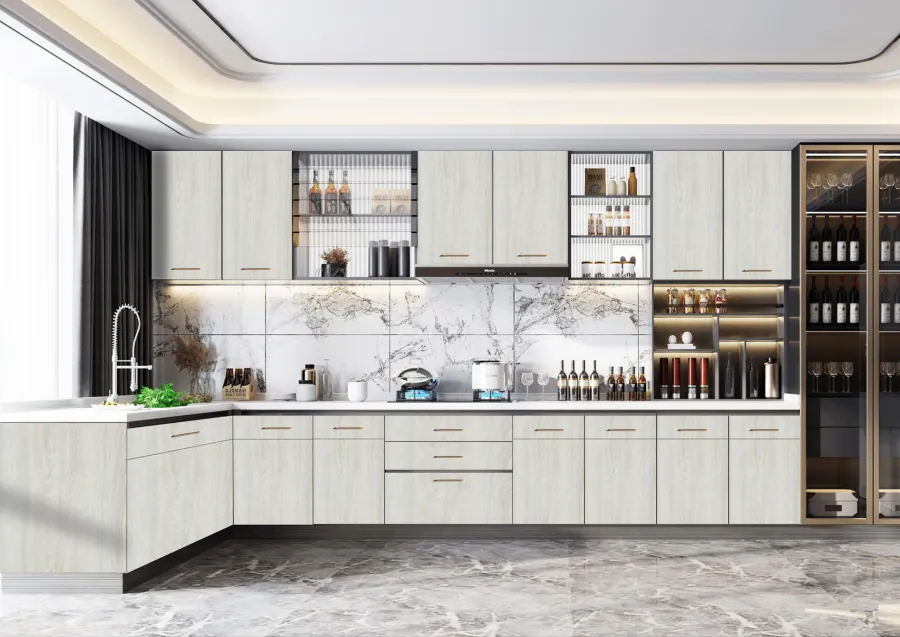
Cabinet boxes look alike once they're installed. What you see, and what dates a kitchen, is the door. Here are the main styles, with samples from our showroom.
Shaker
A five-piece door: a frame of four pieces around a flat, recessed center panel. It's been popular for decades because it works in a 1960s ranch house, a new townhome or a craftsman, and it takes any color well.

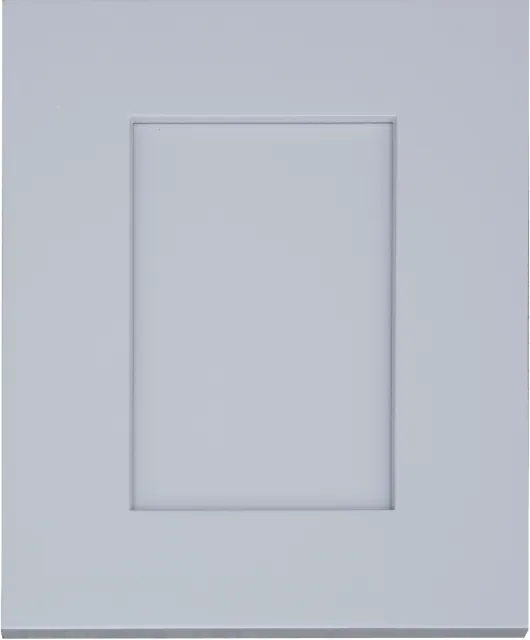

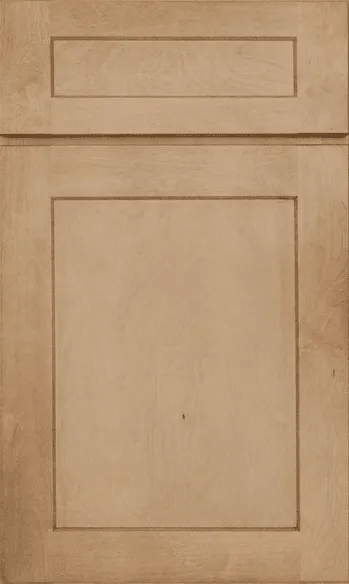
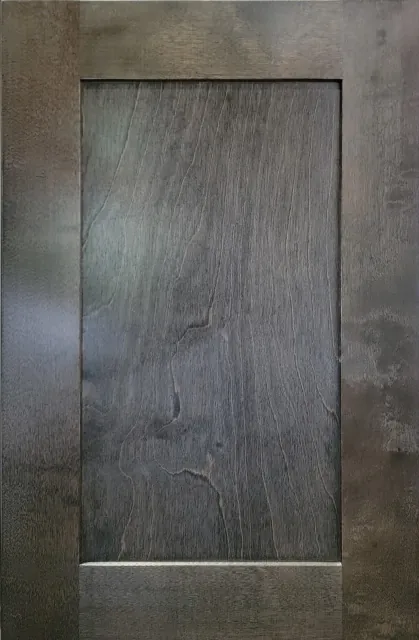

- Best for: almost any home, buyers who want a kitchen that won't date quickly, and resale.
- Watch for: the recessed panel collects a bit of dust in the corners; wipe it with a soft cloth.
Slim shaker
The same idea with a much narrower frame, often around half the width of a classic shaker rail. It looks lighter and more modern while keeping a little detail.
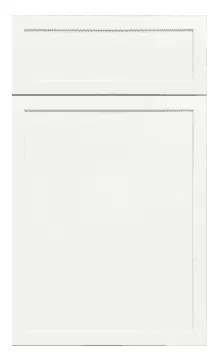
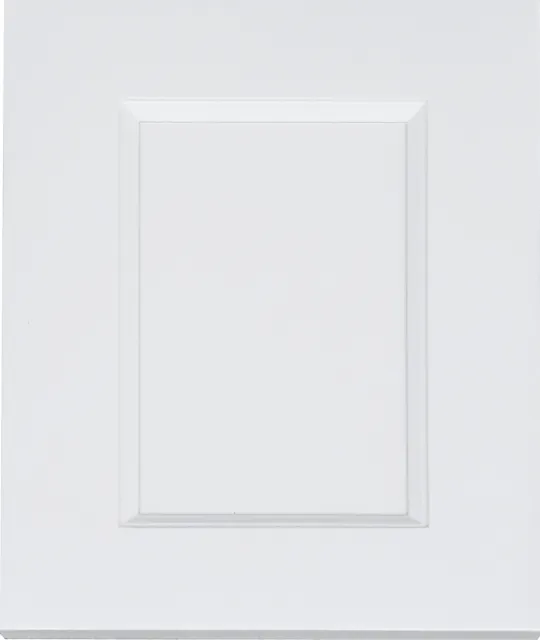

- Best for: transitional kitchens, smaller rooms, and anyone who finds full shaker too traditional.
Flat panel (slab)
A single flat door with no frame. It's the look of European and contemporary kitchens. Wood-grain slabs feel warm; high-gloss and matte solids feel crisp and modern.

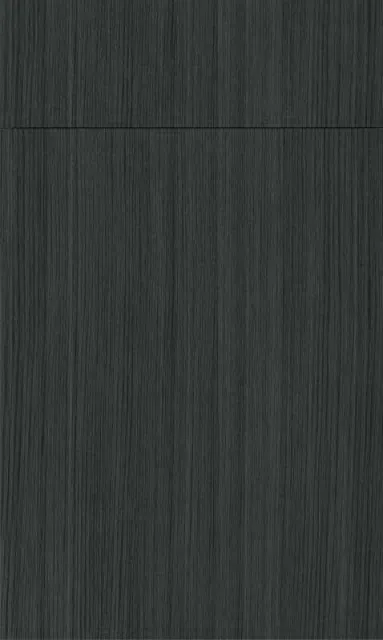

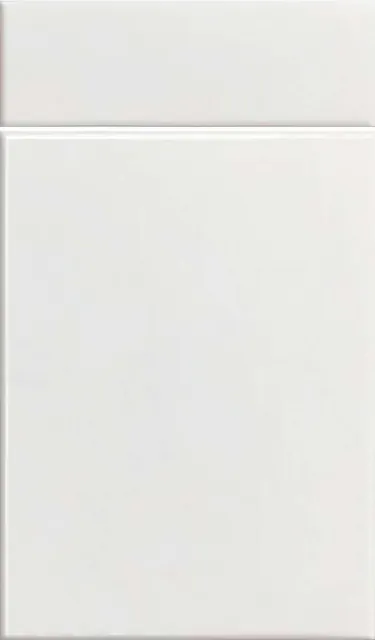
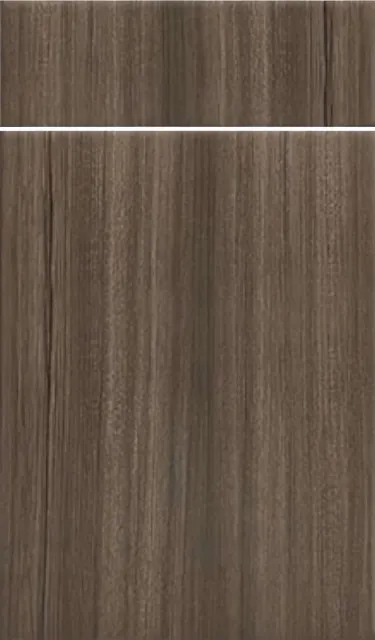
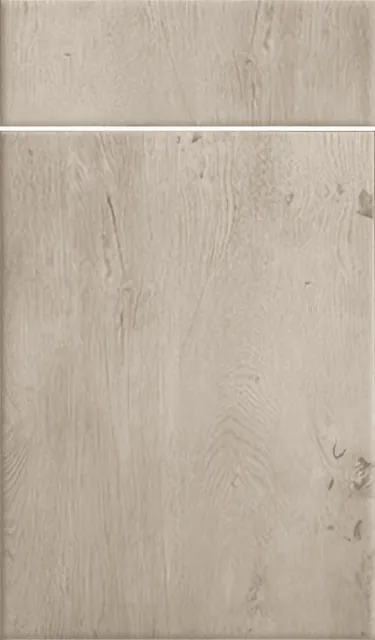
- Best for: modern and mid-century homes, easy cleaning (nothing to catch grease), and handle-free looks with long bar pulls or edge pulls.
- Watch for: high-gloss shows fingerprints more; wood grain hides them best.
Other styles you'll see
- Raised panel: the center panel is raised and shaped. Traditional; less common in new kitchens.
- Glass-front: a frame with glass instead of a panel, usually for a few upper cabinets to show dishes or break up a long wall.
- Open shelving: not a door at all, but often mixed with upper cabinets.
How to choose
- Start with the house. Shaker suits most Bay Area tract homes. Flat panel suits mid-century and modern homes.
- Decide how much it should stand out. A white or light-wood kitchen feels bigger and calmer; navy, black and walnut make a statement.
- Consider two tones. A darker or wood island with lighter perimeter cabinets is a popular way to add color without overwhelming the room.
- See the door with your countertop and floor. A door that looks great alone can clash with a slab. Our mix-and-match 3D kitchen and the matching guide help.
- Touch the finish. Painted, lacquer, wood-grain and melamine all feel different. That's what the showroom is for.
Questions
What is the most popular kitchen cabinet door style?
Shaker, by a wide margin. It suits most homes, takes any color, and doesn't date quickly.
What is the difference between shaker and flat-panel cabinets?
Shaker doors have a frame around a recessed center panel. Flat-panel (slab) doors are a single flat surface with no frame, which looks more modern and is easier to wipe clean.
Are white shaker cabinets still in style?
Yes. White shaker remains one of the most-chosen kitchens because it pairs with almost any countertop and floor. Warm wood tones and two-tone kitchens are the most common ways to give it more character.
Can I see these door styles in person?
Yes. Every style on our products page is in the Newark showroom. Text 510-676-0390 to book a visit.